
This talk explores the contested meaning of “lived experience” in academic and professional contexts, especially within historical practice. Drawing on research into illness fabrication in children and the author’s own personal history, it examines how lived experience shapes both scholarly work and understandings of expertise. The session also considers how academics and professionals use—or often overlook—their own lived experience in producing knowledge. The event will include presentation, discussion, and Q&A, and is free and open to all, including non-members.
Writing the history of illness fabrication, lived experience and what it means for professional practice of all kinds – Dr Chris Millard
10 June, 2026
12:00 pm
Online
Workshop
Lunchtime Event 10th June 2026, 12:00 – 13:30pm
Guest Speaker: Dr Chris Millard, University of Sheffield
Free to attend but please book your place here.
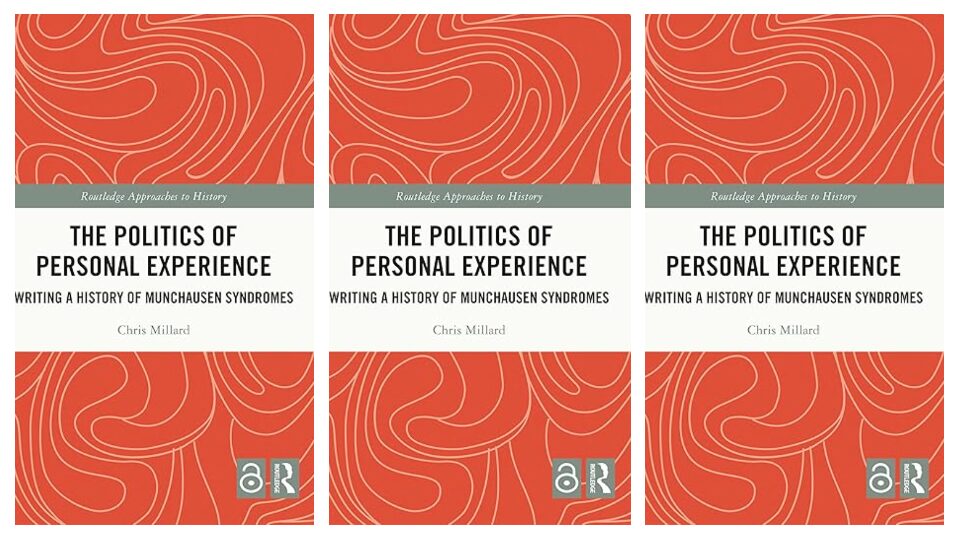
The role of ‘lived experience’ in academic, practical and professional spaces is contested and uncertain. The term contains many overlapping meanings, and there are often fractious contests over how ‘lived experience’ might exist in tension with other kinds of expertise. The discipline of academic history is a relatively inhospitable place for ‘lived experience’ on the part of the historian, even as historians attempt to elicit and collect the ‘lived experiences’ of others. In this context I have written a book about the history of illness fabrication and the induction of illness in dependent children (what used to be called Munchausen Syndrome and Munchausen by Proxy). I have also been explicit within the book that my mother exhibited illness-fabricating behaviour for much of her adult life, and took me around hospitals for much of my childhood. I have attempted to chart the implications of this ‘lived experience’ for the written history. I have used roughly half of the book to investigate the various ways that different academics have used their lived experience in their work (most often dumped untheorised in prefaces, acknowledgements or forewords). I want to think through in a more precise and specific way what we mean when we talk about ‘lived experience’, and what this means for professional practice of all kinds. ‘Lived experience’ is not just an attribute of the people helped by psychiatric or social work professionals, just as it is not solely something that past actors have, as they populate social histories. Professionals have it too – even if we often forget it in our work.
The session will be a mixture of presentation, discussion, and Q&A.

This session is part of a series. The History and Practice Special Interest Group aims to create a safe space to explore historical issues concerning child abuse and child protection in a deep and reflective way. Chaired by Dr Ruth Beecher and Dr Claudia Soares.