
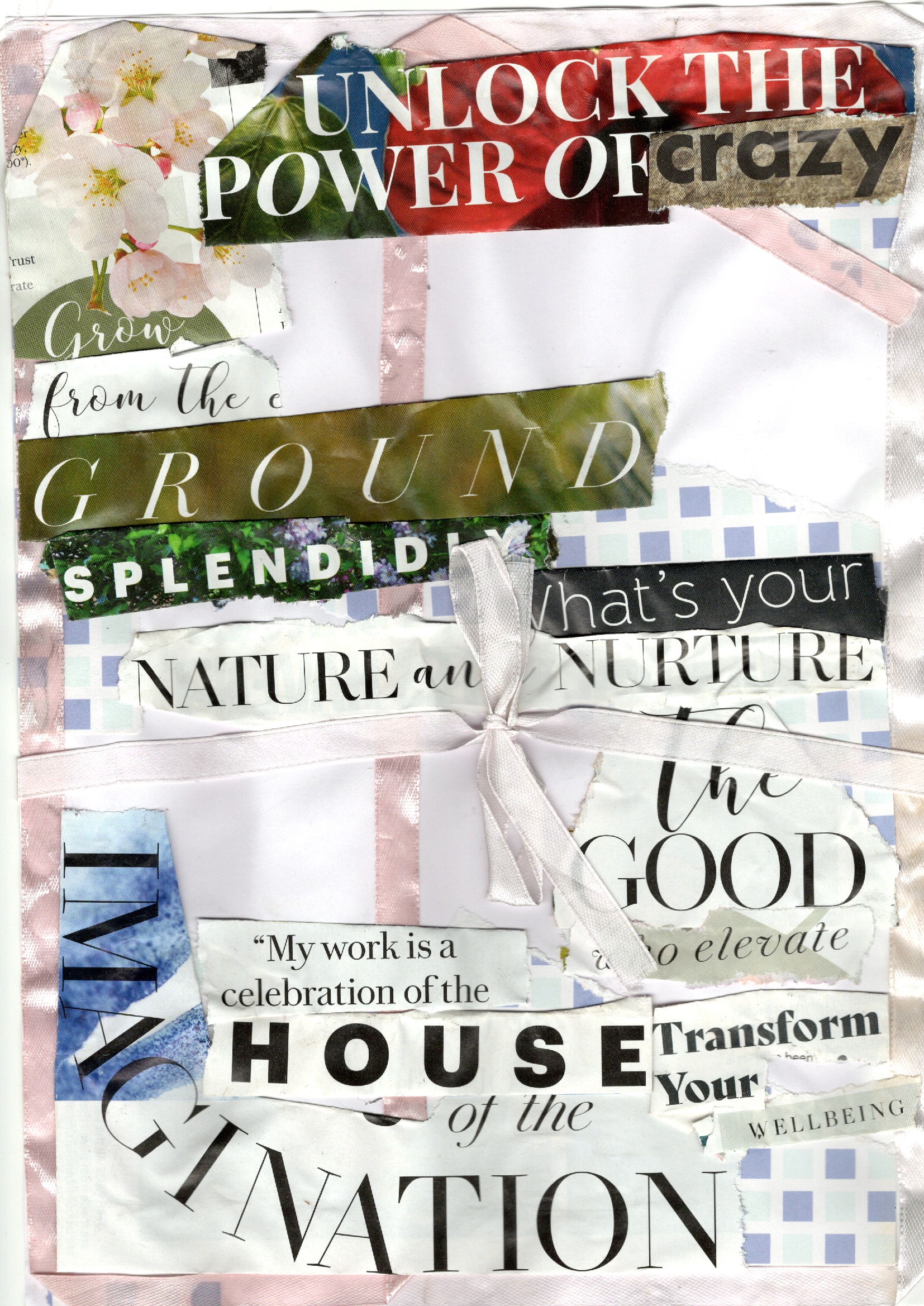
Reflections on our Creative Collective: Sensing Ease, Duality, and Reclaimation
Naomi “Camz” Campbell reflects on a recent Creative Day which was planned and facilitated by the Recovery Histories Lived Experience Advisory Group (LEAG) Members. It brought together the LEAG and the Core Research Team to reflect on the concept of ‘recovery.’
Step 1: The Arrival and Environment (The Container)
Returning back to the LEAG meeting felt like a warm reunion. Even though I was 10 minutes late due to the tube strike, I felt warmly embraced and highly valued. People saw me with a smile and mentioned my name with a high-altitude energy it was like a fresh sense of joy. The welcoming check-in really created a sense of ease because there was already a card at my seat waiting for me. This made me feel like I was already thought of before I even came, creating a deep sense of acknowledgement and belonging.
Step 2: Creative Expression vs. Verbal Noise (The Oblique)
Engaging in different creative tasks from making designs and the boat journey, to having group discussions about what recovery means to us felt entirely authentic. It allowed us to tap into the creative side of our brains as another method of sharing our truth without using words. Non-verbal communication was a peaceful and tranquil approach to sharing heavy and traumatic moments in a delicate way without being intrusive, getting deeply emotional, or feeling triggered. This beautifully reminds me of Laban and the Sesame oblique approach to using myth as a way to share narratives in a fluid manner.
Step 3: The Synergy of the Group (The Duality)
Speaking about our experiences as individuals and as a collective, it was very refreshing to recognise the similarities and non-similarities of how we’ve had to navigate through our journeys. There was a powerful resonance in recognising that we are all survivors, yet we are also practitioners and researchers who have found ourselves here in this space, still fighting against and for better systems. We openly recognised the ongoing impact of these structures, honouring the reality that trauma doesn’t simply die when the abuse has stopped.
Step 4: Looking Forward (Nervous System Integration)
It was a true pleasure to leave the session feeling revitalised and lifted after delivering a mindfulness session towards the end. Being a part of this LEAG group has given me a genuine opportunity to spread my wings, speak my truth, and demonstrate how creative methods of holistic practice can contribute towards the process of navigating through trauma safely supporting the nervous system to release and restore, and fir us to embrace our own our own rhythm and flow
MORE INFO ABOUT THE PROJECT
www.shra.bbk.ac.uk/projects/recovery-histories/
CONTACT US
Telephone: 020 3926 3679/ 020 3926 2813
E-mail: recovery-histories@bbk.ac.uk
