
Writing Difficult Subjects – Lived Experience and Memoir
A guest blog by Julie Wheelwright.
Writers and readers of memoir understand, intrinsically, that our memories are not data collecting machines. We might think of memory operating more like a film, surfacing in shifting shapes, changing hues and shades, textures and tones or appearing as a sequence of images that dissolve if pressed for further detail. The memoir writer must capture those fleeting impressions into a coherent text and, by arranging them into a narrative structure, imbue them with meaning. Through such acts, writers form a pact with their reader to tell the clearest, and most convincing approximation of a truthful past.
I’ve chosen here to explore here how writers employ particular literary strategies to address memoir’s fundamental challenges, namely, the requirement of believability, the need to engage readers while avoiding aestheticizing violence, and gratituous or distorting details. My focus is the particular complexity, for victim-survivors of Child Sexual Abuse (CSA), in writing a truthful account of their experience while also engaging in the imaginative invention we associate with art.
There are also questions of power since we assume that the writer/narrator of a memoir is simultaneously powerful, because they have the privilege of voice, and vulnerable because a memoir, by its very nature, exposes the author’s vulnerability. CSA memoirs produce meaning through their exploration of power struggles over who owns the languages of pain, who deserves to be protected as a victim and who should punished as a perpetrator. But as Lilie Chouliaraki has observed in Wronged: The Weaponisation of Victimhood (2024), within our current media landscape, perpetrators and those interested in preserving systems that produce sexual violence, can also make claims to victimhood which has become a highly contested label.
So the act of writing about one’s most painful experiences for public consumption is a high risk strategy. Yet life writing about sexual violence performs a vital task in providing survivors, and those who study it, with a voice. Over the past two years, Ruth Beecher and I have run a series of creative writing workshops at Birkbeck, designed to support early career researchers and academics in the field of sexual violence. Our sessions aimed to provide participants with the tools of narrative writing to both understand how such life stories are created, how to apply these techniques to their academic outputs, and how they might provide an outlet for self-reflection. Out of our creative writing, group discussions and close reading of texts, have come valuable insights into the potential for language to mediate, transform and communicate these experiences.
A key concept is how one might shape narratives about sexual violence. In writing about our own, or others’ most painful experiences, what words, phrases, narrative structures, images and even syntax might we choose to tell, as the French memoirist Neige Sinno describes it, these ‘ugly’ stories? Where and how can we position our subjectivity as both powerful and vulnerable? How might we reach, and keep engaged, readers beyond academia to affect much-needed systemic change?
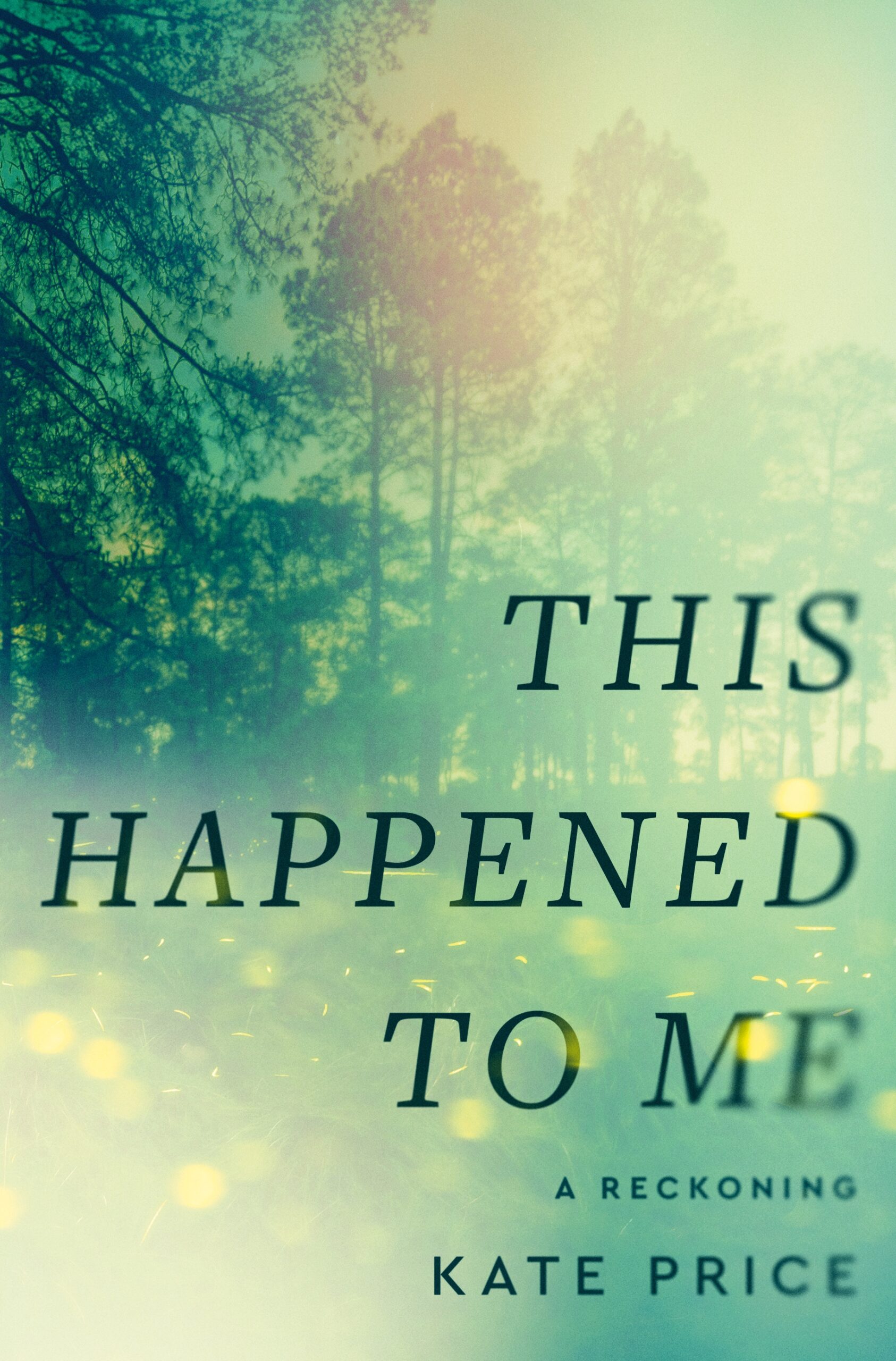
One answer may lie in CSA memoirs where writers are exploring new strategies for discussing sexual violence that convey their authenticity, either through their structure, their authorial voice, or their language choices. Two recent memoirs, Neige Sinno’s Sad Tiger (translated by Natasha Lehrer) and the American academic Kate Price in This Happened to Me: A Reckoning, offer techniques that might be helpful for victim-survivors considering publication and for researchers who work with them.
A central question is the choice of narration: who is telling this story and why should we believe them? As de Bres writes in Artful Truths: The Philosophy of Memoir (2021) autobiographical writing requires the narrator to possess an ‘objective reality of the self and the world, the possibility of truth and knowledge, and the capacity of literature to capture and express all of these.’ By acknowledging the impossibility of complete objective, the memoirist seeks alternative expressions of truth and knowledge. Even choosing which ‘events’ will best illustrate the narrative, is a highly subjective decision since they direct the reader’s attention and engage their emotions.
To create a compelling story from memory, a writer may embellish details or reorder the chronology of events, and inevitably leave out others. One strategy for establishing ‘truthfulness’ is through passages of reflection where the writer admits to the instability of memory and/or seeks corroborating evidence. This process of remembering events, setting them within an appropriate context, and organising them into a narrative structure enables a writer to gain psychological distance and reflect on the meaning and consequences of these experiences.
In the case of CSA memoirs, another important factor in that transformation is temporal. Price makes the fascinating observation that fifty-two is the average age when people were sexually abused as children publicly disclose their abuse. Both Price and Sinno published their memoirs in their fifties after more than a decade of writing and researching their past. So time and life experience (Price’s parents had passed away before she published, Sinno’s stepfather had served a prison term for his abuse) may support the development of critical distance.
Although decades may have passed since the abuse occured, the writer is still, however, required to revisit it. A searing example is Sinno’s opening of Sad Tiger with a brutal account of her stepfather’s abuse; in the third person, the narrator describes the scene in the present tense. A seven- year-old is with her stepfather who is ‘saying the words to make the child come closer, putting the erection in the child’s mouth, coaxing the child to open wide.’ The authorial ‘I’ is temporarily displaced, and the subject becomes a universal and generic ‘child’. Then Sinno’s narrator shifts our gaze from this horror to a biographical ‘portrait’ of the stepfather who continued to rape her until she was fourteen. Three years later, fearing that he might abuse her siblings, she disclosed his abuse to her mother. When confronted, the stepfather partially confessed, was criminally prosecuted and served a prison sentence.
By acknowledging the tension ‘between the desire to understand and the impossibility of understanding’, Sinno forecloses easy explanations of her stepfather’s abuse, not because she is the narrator but because she so clearly articulates its impossibility to comprend. Then, returning to her child’s perspective from this reflection, she dismantles her stepfather’s reputation within their community as a ‘lonesome cowboy’, a heroic mountain rescue worker, a loving husband and devoted father.
This splitting between child victim and a distanced, adult analyst enables Sinno to balance descriptions of her abuse with other memories of her childhood, her mother and biological father, her siblings, her deep love of literature and landscape. At university she reads Nabokov’s Lolita through a survivor’s lens and discovers ‘so much overlap with my own grim history’. She challenges the fictional Humbert’s perspective which, she realises, exposes how perpetrators justify their child abuse and how we, the reader, are seduced by their stories. She draws inspiration from Toni Morrison’s novel The Bluest Eye, from Virgina Woolf’s autobiographical fiction, Moments of Being, Annie Ernaux’s auto-fiction and Margaux Fragoso’s CSA memoir Tiger, Tiger. The insight she gleans from these texts isn’t a diversion from her ‘horror story’ but a chorus of writers who understand it.
Threaded through this non-linear structure are grueling descriptions of her stepfather’s abuse, then his prosecution and release (only to remarry and father other children), her mother’s complicity (she later joins her daughter in prosecuting the stepfather) and her own experience of motherhood. There is no happy ending but, even as an adult, an accomplished novelist, poet and translator, the corrosive memories of abuse (about which she rejects the idea of ‘some hypothetical objective truth’), are never entirely absent.
While Sinno is a masterful and inventive storyteller, she shares with Price the vital urgency of writing about CSA to puncture its complicity of silence. Before Price published This Happened to Me, she sought treatment for post-traumatic stress with Dr Bessel van der Kolk, the psychiatrist whose often controversial PTSD treatment is described in The Body Keeps the Score. Although Price had only patchy childhood memoires of growing up in central Pennsylvania, they included her father’s sexual and physical abuse. The details emerged during her sessions with van der Kolk who would use her as an anonymous case study in The Body Keeps the Score. She would then spend a decade working with Boston Globe journalist Janelle Nanos to expose and document how he trafficked Kate and her sister.
Price describes a hardscrabble childhood in Appalachia where her father, an alcoholic, regarded all the women in his family as ‘property’. Her parents divorced when she was in her teens and her mother encouraged her to seek refuge in academic achievement, escaping to a local college, then university in Boston. Using an adult narrator’s perspective, she describes learning how to navigate her drunken father’s moods and even darker memories, the meaning of which only surface decades later, of being woken from sleep by a needle puncturing her arm, taken from her bedroom at night, smelling a man’s foul breath, and lying in a scratchy blanket smelling of engine oil. Although Price was already researching Child Sex Trafficking, it was only through her collaboration with Nanos that they uncovered evidence from local police that the Price daughters had been ‘sold’ to drivers at Pennsylvania truck stops.
This Happened to Me follows a more conventional chronology than Sinno, creating suspense through Price’s investigation as she unearths details of her father’s crimes. Her style is journalistic; writing in the first person and, in the present tense, recreating dialogue and scenes which build towards dramatic revelations. Price credits the #MeToo movement, and its subsequent publishing market for books addressing sexual violence, for facilitating a larger conversation. According to Sinno, it has given writers ‘a language to speak about unspeakable things’, prompting her to write Sad Tiger, ‘Because for me too’. Her memoir, first published as a novel in France in 2023, won huge literary success and coincided with the shock of Dominique Pelicot’s conviction for drugging and raping his wife, Gisèle, alongside 51 other male accomplices. Feminist writers have described the trial as a wake up for a nation which, according to lawmaker Marie-Charlotte Garin, can no longer deny ‘how big rape culture is in France’.
By breaking long-held silences, these writers hope to bring about societal transformation of the systems that enabled their abusers. As Price explains why she wrote This Happened to Me ‘I should be dead and that’s the reason I feel a strong calling to do this work . . . what happened to me is very much still happening to children throughout the country.’ Sinno’s insight that ‘I tell myself the reason that I’m still alive is that I have to tell this’, is hauntingly similar as she rages against society’s willingness to ignore CSA. ‘Silence around rape is the focus of the problem,’ she writes, ‘. . . it is not an isolated consequence of violence, it is violence.’ Camille Kouchner acknowledges its corrosive quality, and broke her family’s ‘silence’ in, The Familia Grande (2022), a memoir that recounts her stepfather’s abuse of her twin brother. As Kouchner explains to her mother, who dismissed evidence of her husband’s abuse, ‘I’m writing for all the victims, the countless victims who are never mentioned because no one knows how to look them in the eye.’
The authors discussed here understand the need to convince their readers by providing evidence (newspaper reports, links to documents, interviews with other witnesses) and by acknowledging the limitations of their narrative perspective. While Sinno writes that, ‘there is no possibility of authenticity, there is no possibility of lies’, her authenticity lies in her unflinching descriptions of abuse and documentation of her stepfather’s successful criminal prosecution. Both writers discovered, within their communities, a reluctance to believe their experience which compelled them to write, forging a new language to address sexual violence. The memoirs mentioned here, along with many others, are overturning the ordinary linguistic register to nourish thought, dialogue and imagination between readers and writers. The memoirists’ willingness to expose their vulnerability speaks to their recognition that if CSA is to be eradicated, it will require the collective conversations that their painful life stories have started.
With thanks to Ruth Beecher, Tracey Loughran and Jennifer Martin for their comments on earlier drafts.
